

Jonathan Guajardo Brings BIC Education to Family Medicine and Community Care
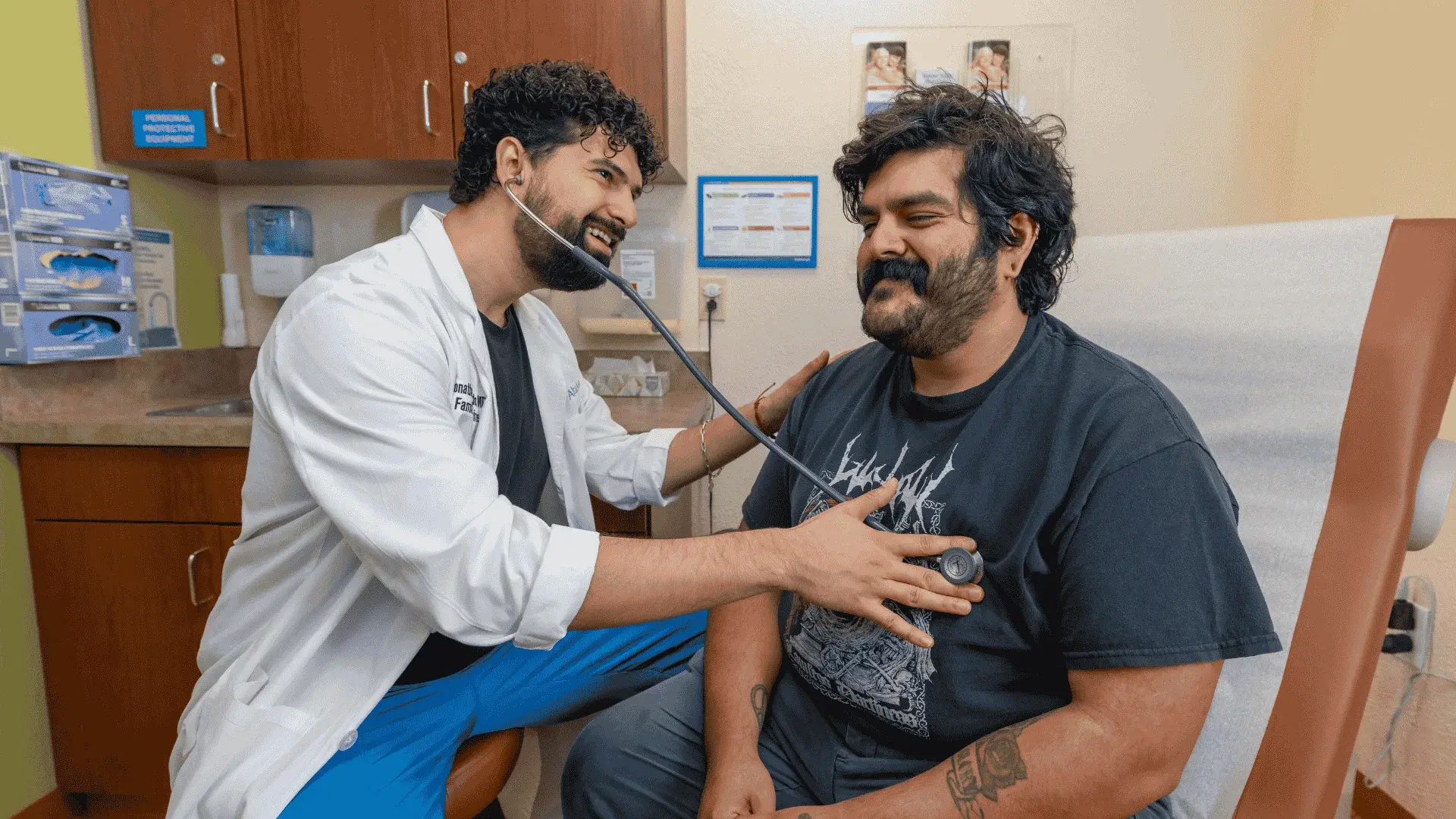
Dr. Jonathan Guajardo (B.S. ’17) has built his career around understanding the people and circumstances behind a patient’s medical chart. A family medicine physician and site medical director for four clinics in East Los Angeles, he credits the Baylor Interdisciplinary Core with shaping his approach to patient care and leadership.
Guajardo will return to Baylor to deliver the BIC Alumni Homecoming Lecture on November 6, reflecting on how his undergraduate education continues to inform his work.
“I always wanted to be a family medicine physician,” Guajardo said. “I wanted to be present in my community and make actionable change. I wanted to understand the things that go under the radar that influence patients’ behavior, health and illness.”
Guajardo came to Baylor from Houston with interests in philosophy, religion and community leadership. Through the National Hispanic Institute, a mentor encouraged him to debate, think independently and ask questions. The BIC offered a place to explore different cultures and perspectives alongside his preparation for medical school.
College brought personal adjustments as well. Guajardo drove himself to move-in day while his parents worked, arriving with a duffel bag and a backpack. Once classes began, he encountered discussions that stretched him intellectually.
“I definitely felt my limits in that first semester, seeing the difference between my experience in high school and college,” Guajardo said. “I was not prepared for the level of discussion. I wasn’t there yet, but I wanted to get there.”
Friendships helped Guajardo find his footing. Outside Alexander Hall, he joined students discussing philosophy, religion and how they might improve the world. Those conversations gave him a community where he could dive into new topics.
In medical school, Guajardo began to recognize how those experiences could inform his work with patients. Moving from coursework into clinical training required him to bring together scientific knowledge and an understanding of the person receiving care.
“I struggled in medical school because I couldn’t keep it focused; I wanted to look at the big picture,” Guajardo said. “When my clinical years came and I had to take care of a patient holistically, that’s when the experience from the BIC really clicked into place. The concept of being able to bring it all together and apply it is what I took out of the BIC.”
Today, Guajardo considers how work schedules, transportation, food access and neighborhood conditions affect a patient’s ability to follow a treatment plan. His advocacy extends from helping individuals navigate those barriers to considering how community resources could better support their health.
“Health care is not just medical care; it is food, education, community and socialization,” Guajardo said. “It is infrastructure, and if we don’t advocate for change at the root cause, we’ll continue to face the issues we see today. When you start bringing medicine together with policy and civil engineering, with that interdisciplinary mindset, you start advocating for healthy communities.”
As a medical director, he also examines how clinic operations affect care. Discussions about emergency department use prompt questions about continuity of care, physician workloads and patients’ reasons for seeking emergency services. Addressing those issues requires expertise from colleagues throughout the clinic.
“We all have to work together as a team, and not only as a team, but as an organism,” Guajardo said. “You must know when to draw on your colleagues’ expertise when you are out of your field and apply what you learn from working with them. Sometimes I put my social worker hat on in the exam room, and sometimes I have to put my case manager hat on.”
As he prepares to speak with Baylor students, Guajardo hopes to encourage purposeful choices and a willingness to serve. His career has taken him to California, though he once expected to return to Texas to practice medicine. Through those changes, he has held onto a conviction he expressed when his father cautioned him against expecting to change the world.
“Maybe I can’t change the world, but maybe I can change someone’s world,” Guajardo said. “And I try to do that every day.”
If you are interested in hearing Guajardo’s lecture, he will present “Leap Before You Think” at 2:30 p.m. Friday, Nov. 6, in Bennett Auditorium.