

Honors Program
The Honors Program is designed for students who love to learn. Are you a student who goes above and beyond on required assignments? Have you ever asked a teacher for further reading on a topic? Do you sometimes find yourself wishing that a class wouldn’t end, but that you could inquire more deeply into the subject? If so, Honors might be for you.
Why Choose Honors Program
The Honors Program is for students who genuinely love to learn. If you have ever gone above and beyond on an assignment, asked a teacher for additional reading, or wished a class wouldn’t end, you might feel at home here. Open to all majors, the program adds depth to your studies through small, seminar-style classes, close mentorship from devoted faculty, and a culminating senior thesis. It is a place for meaningful questions, thoughtful conversation, and rigorous academic engagement.
Learn More about the Honors Program
The Honors Program enriches any Baylor major with an interdisciplinary honors curriculum designed to deepen students' academic experience. Through small discussion-based courses, close faculty mentorship, and a senior honors thesis, students are challenged to think critically, pursue original scholarship, and engage ideas across disciplines. Hear from Dr. Elizabeth Corey as she explains how the Honors Program complements students' academic and professional goals.
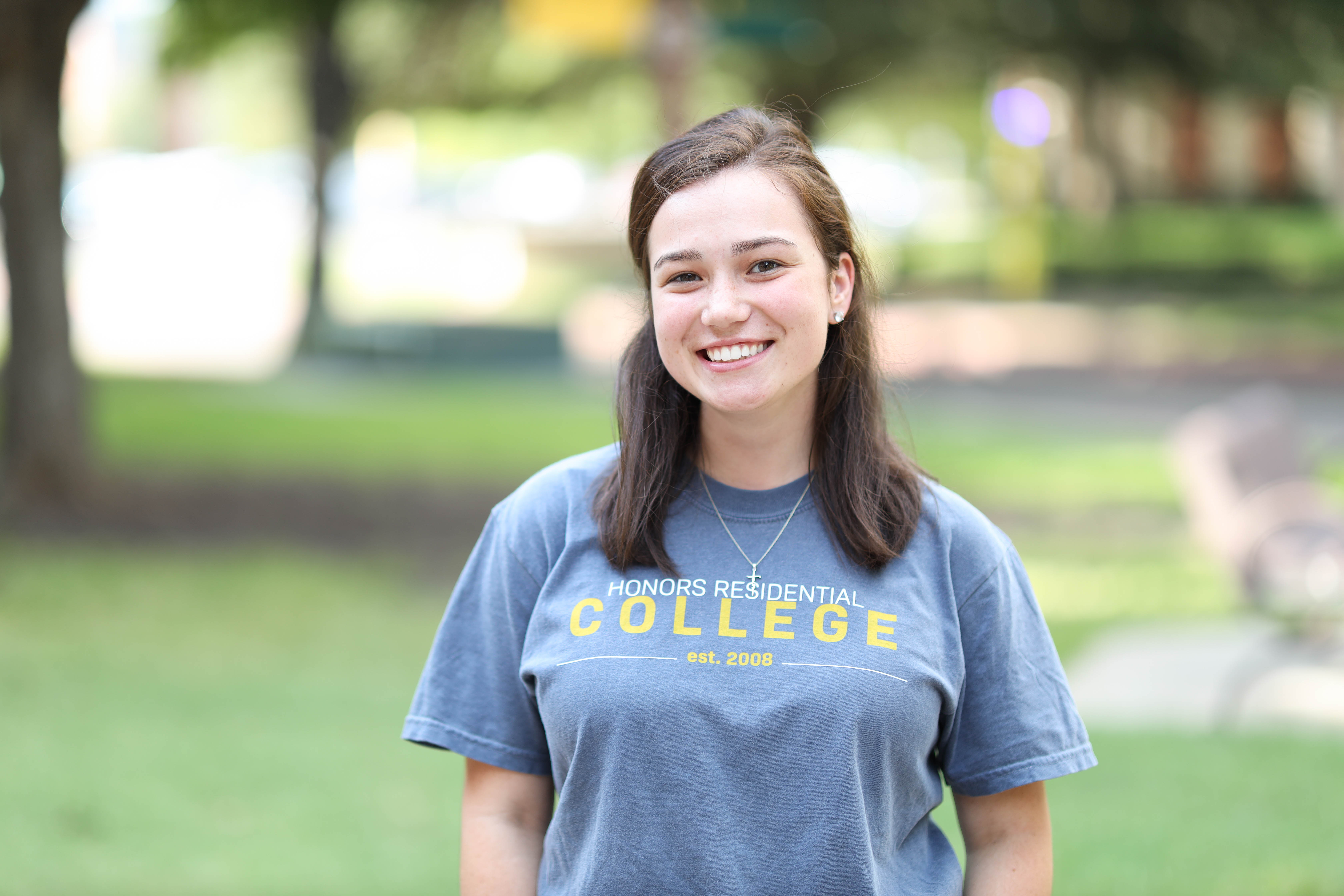
My experience at Baylor University cannot be adequately described without including the Honors College. Every aspect of my wonderful four years of college were affected by being a University Scholar and Honors Program student. From incredible professors who care about their students as godly people and not just another grade, to classmates dedicated to being lifelong learners, to hours long debates in the dining hall with friends, to the meaningful community of faith and friendship that living in the Honors Residential College provided, each area of my life has been enriched by being an honors student.
Honors Program News
Honors College graduates Ashleigh Jarrous, Isabel Kau, and Kristen Nakamura, were recently named the 2025 recipients of the F. Ray Wilson Award for Best Thesis, a recognition that celebrates excellence in the scholarship of undergraduate thesis writers in Baylor’s Honors Program.
University Scholar Abhinav Rajkumar joins researchers at Baylor College of Medicine and Texas Heart Institute for life-saving medical research
Walter M. "Sparky" Matthews, M.D., B.A. ’92, has been selected by Baylor’s 2026 Senior Class as the Collins Outstanding Professor.
In Professor David Corey's course on pluralism, students are asked to consider an idea that initially feels counterintuitive: two people can argue opposite sides of a political debate and both be right.