

How David Corey, Ph.D., is Teaching Students to Think Differently About Politics
In the classroom and in his forthcoming book, Corey explores how pluralism shapes political conflict and what it means for a divided society.
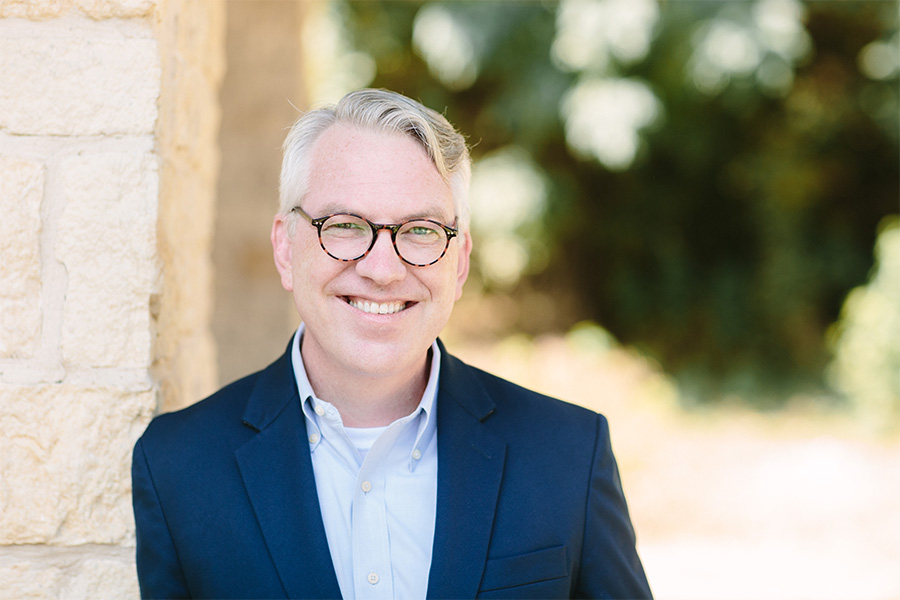
In Professor David Corey's course on pluralism, students are asked to consider an idea that initially feels counterintuitive: two people can argue opposite sides of a political debate and both be right.
The claim challenges a basic assumption many students bring into the classroom. If two positions contradict each other, one must be wrong. Corey, Professor of Political Science in the Honors Program, invites students to see political disagreement differently.
“The claim is that in a political debate, one person could be arguing one thing and the other the opposite thing, and they could both be right,” Corey said. “Students initially think that’s not logically possible. But politics isn’t mathematics. In politics, people are often prioritizing different goods that are genuinely valuable and yet incommensurable.”
Corey has spent much of the past decade exploring that tension in his scholarship. His forthcoming book, The Politics of War and the Politics of Peace, examines how Americans understand the nature of politics and how those assumptions shape political life.
For many Americans today, Corey argues, politics is imagined primarily as conflict. When political life is understood as a war between opposing sides, every election begins to feel existential.
“If politics is understood as war, nobody can afford to lose,” Corey said. “If one side wins, the other feels like everything important to them is under threat. Over time, that creates a culture where opponents stop looking like fellow citizens and start looking like enemies.”
Corey’s research begins with what he identifies as three defining features of American society: a strong commitment to individual freedom, a belief in political equality and a deep pluralism of worldviews.
“Because Americans value freedom, people develop very different accounts of what matters most,” Corey said. “You might have religious worldviews, business-oriented worldviews, social justice movements and many others. Those beliefs shape what people expect politics to accomplish.”
The challenge, he said, is that these visions cannot always be reconciled.
“Pluralism means people hold different ideas about the highest good,” Corey said. “One person may prioritize economic stability because of experiences with poverty. Another may prioritize humanitarian concerns because they’ve witnessed suffering. Both values are real goods, and there isn’t always a neutral way to rank them.”
To address that challenge, Corey proposes what he calls a “politics of peace.” Rather than treating politics as a battlefield, he encourages cooperation where agreement exists and restraint where it does not.
“The more pluralist a people become, the less national government can and should do,” Corey said. “If we try to force the government to enact our particular worldview, we’re imposing that vision on fellow citizens who have an equal claim to political freedom.”
Practices such as federalism and voluntary association, he said, can help channel disagreement constructively while allowing communities to pursue their priorities in different ways.
In the classroom, Corey hopes students leave with a different way of approaching political life.
“I want them to see politics as a philosophical problem,” Corey said. “Instead of treating it like a contest where you pick a side and try to win, I want them to ask deeper questions about why disagreements arise and what politics can realistically accomplish.”